
The SpaceX-Cursor deal isn’t about a coding tool — it’s the clearest proof yet that in the AI economy, your API supplier is your most dangerous competitor, and owning the stack is the only durable hedge.
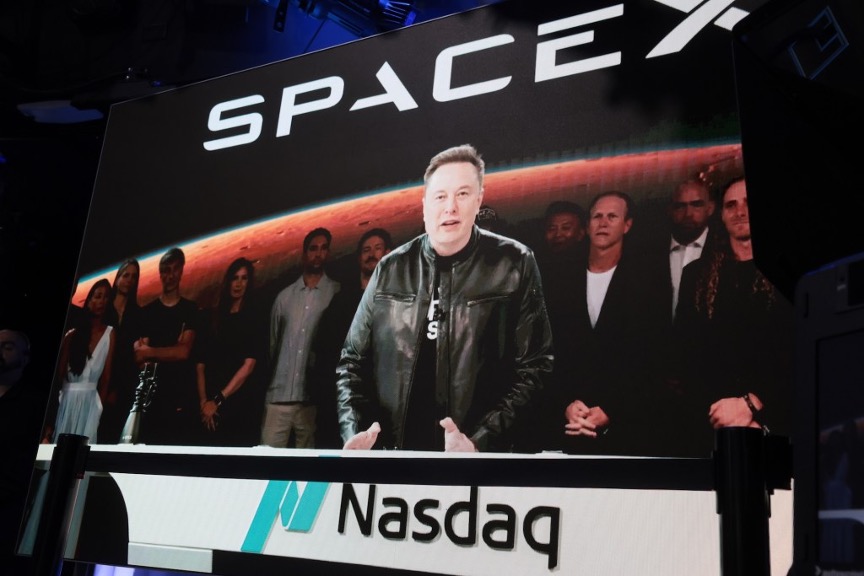
Four trading days after the largest initial public offering in history, SpaceX spent its fresh stock on the largest acquisition of a venture-backed startup ever recorded. On June 16, 2026, the company agreed to buy Anysphere, the maker of the AI coding tool Cursor, for $60 billion in an all-stock deal expected to close in the third quarter. Per the merger terms, the exchange ratio is tied to the seven-day volume-weighted average closing price of SpaceX’s newly listed Class A shares, and President Gwynne Shotwell called the fit one that “makes a huge amount of sense.” The market initially cheered: the stock jumped roughly 16% on the announcement to a record high, before sliding over the following two sessions.
The temptation is to fixate on the price. At roughly 15 times Cursor’s annualized revenue, the number invites the usual debate about whether mid-2026 AI valuations have detached from gravity. But the sticker price is the least interesting thing here. The real story is what the deal exposes about a structural fault line running through the entire AI industry — one that turns vertical integration from a strategic preference into a survival imperative.
The margin trap that growth could not outrun
By any conventional read, Cursor was a triumph. Its annualized revenue had topped $4 billion by June 2026, up from roughly $2 billion in February, with more than a million paying users — a vertiginous climb for a company barely four years old. Its tools were used by 67% of the Fortune 500 and generating 150 million lines of enterprise code a day.
And yet the company was losing the war it was winning. Cursor’s share of the AI coding market slid from about 41% in mid-2025 to roughly 26% by May 2026 — even as its revenue climbed — because the economics underneath were upside down. Cursor paid retail API prices to Anthropic to power its product while competing head-on against Anthropic’s own Claude Code, which the model maker runs at wholesale infrastructure cost. One Cursor investor reduced the problem to a sentence: “burning $1 to make 90 cents isn’t a business.”
This is the defining trap of the application layer. When your single most important input is supplied by a vendor who also sells a rival finished good, your cost basis is permanently higher than the incumbent you are trying to beat — and no amount of top-line growth fixes a structurally negative gross margin. Anthropic, for its part, has the balance sheet to press the advantage. It closed a $30 billion Series G in February 2026 at a $380 billion valuation. The supplier was not staying neutral. It was scaling its own competing product faster than its customer could defend share.
SpaceX is buying a way out of the bill
Seen through that lens, the spacex cursor acquisition is not a product purchase. It is the removal of a competitor from SpaceX’s own cost structure. The company had already absorbed Elon Musk’s xAI in a $1.25 trillion share-exchange merger completed in February, folding Grok and X into its AI division. That division is bleeding: SpaceX’s AI segment posted an operating loss of roughly $2.47 billion in the first quarter of 2026 alone, against $818 million in segment revenue, with $7.7 billion poured into AI infrastructure in the same three months.
Cursor changes the inputs to that equation in two ways. First, it ends the prospect of Musk’s empire paying Anthropic — a direct AI rival — for the raw intelligence underneath a flagship product. Second, and more strategically, Cursor’s 150 million daily lines of real enterprise code become proprietary training fuel for Grok. SpaceX is not acquiring revenue so much as it is acquiring a data moat and severing a dependency. The financing posture underlines the conviction: days after raising roughly $86 billion in its IPO, SpaceX returned to the market for a record $25 billion corporate bond sale. This is a company deploying capital as if standing still is the expensive option.
What 15x ARR is really pricing
Analysts have split predictably. Oppenheimer raised its price target to $250 and lifted its fourth-quarter AI revenue forecast to $8.75 billion, while Morningstar cut its fair value to $62 a share, citing “sizable dilution.” Both can be right. A 15x revenue multiple looks indefensible for a stand-alone SaaS business carrying negative gross margins. It looks very different if you treat Cursor’s revenue as incidental and its data, distribution, and supplier-independence as the actual assets.
That reframing is the signal every other company should read. The premium SpaceX paid is, in effect, the market price of escaping the margin trap — and it is enormous. For the thousands of B2B software businesses built atop a foundation-model API, the implication is uncomfortable. Anthropic, OpenAI, and Google are not passive utilities. Each is building application-layer products that compete with their own customers, and each does so from a permanently lower cost basis. The neutral-supplier assumption that underwrote a generation of AI startup business plans is gone.
Most of those companies cannot buy their way out with newly minted IPO stock and a million H100-equivalents. SpaceX could, which is precisely why this deal is less a template than a warning. The lesson of the spacex cursor acquisition is not that owning the stack is attractive. It is that, increasingly, it is the only place to stand. In the AI era, your infrastructure partner is also your most dangerous competitor — and rented advantage, however fast it grows, is still rented.
This article is a guest contribution. For ongoing business coverage and analysis, visit Karsane.com.
About Karsane — Karsane is an independent daily covering world news, business, U.S. politics, the economy, markets, technology, health and sports. Read more at karsane.com.